A / Coverage
Camera & Surveillance Coverage
Where cameras actually see, what they miss, image quality in real conditions, recording and retention, and who reviews the footage.
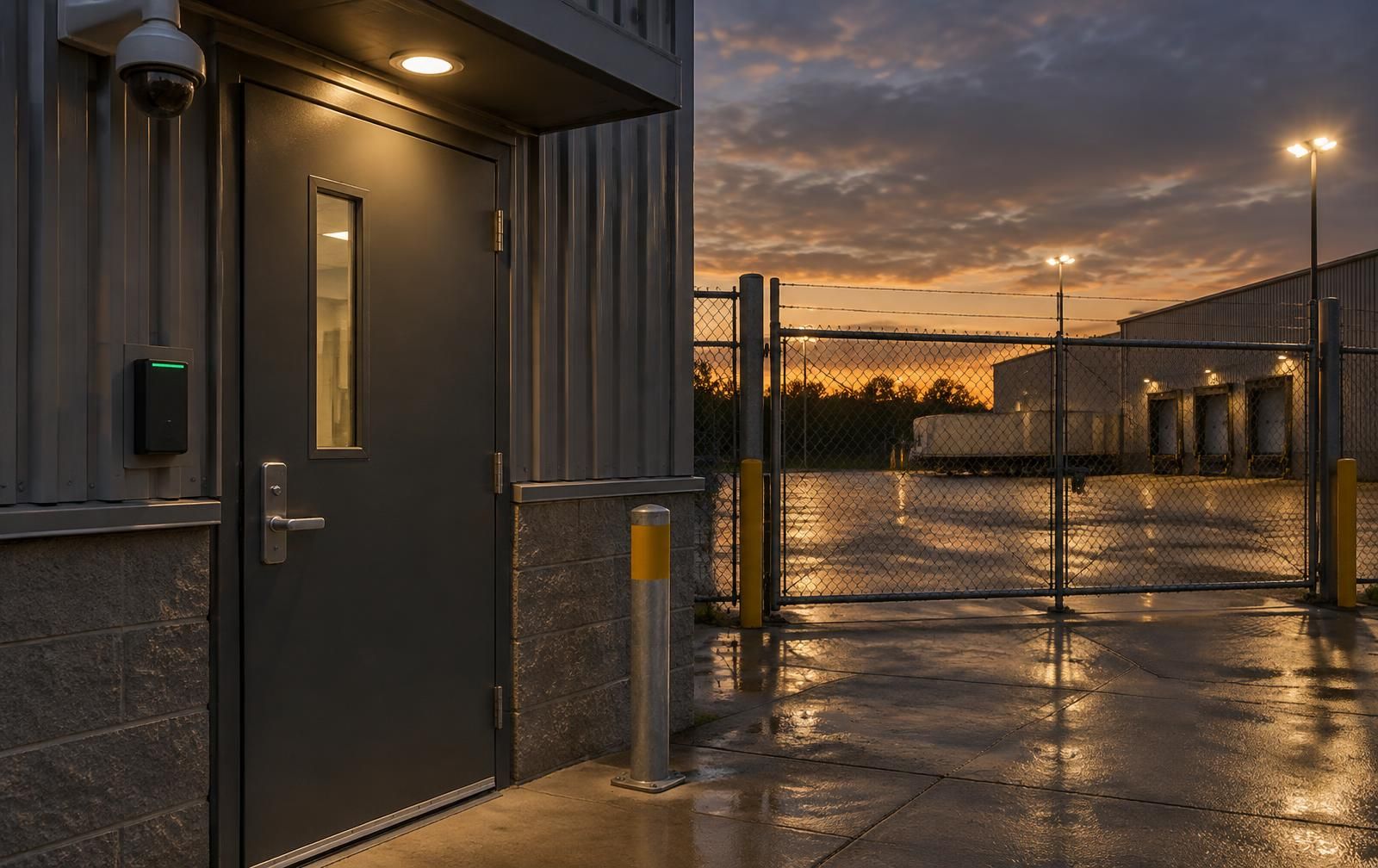
Specialized protection / Auditing & testing
An authorized, evidence-based examination of your security systems and the people who run them: what is covered, what is assumed, and how ready everyone is when something actually happens.
01 / HOW IT CONNECTS
A camera is only as useful as the person watching it and the procedure behind it. Access control depends on who holds credentials and what happens at the door. An alarm depends on who responds.
We examine how your equipment, people, procedures and communications fit together, and where a weakness in one quietly exposes another.
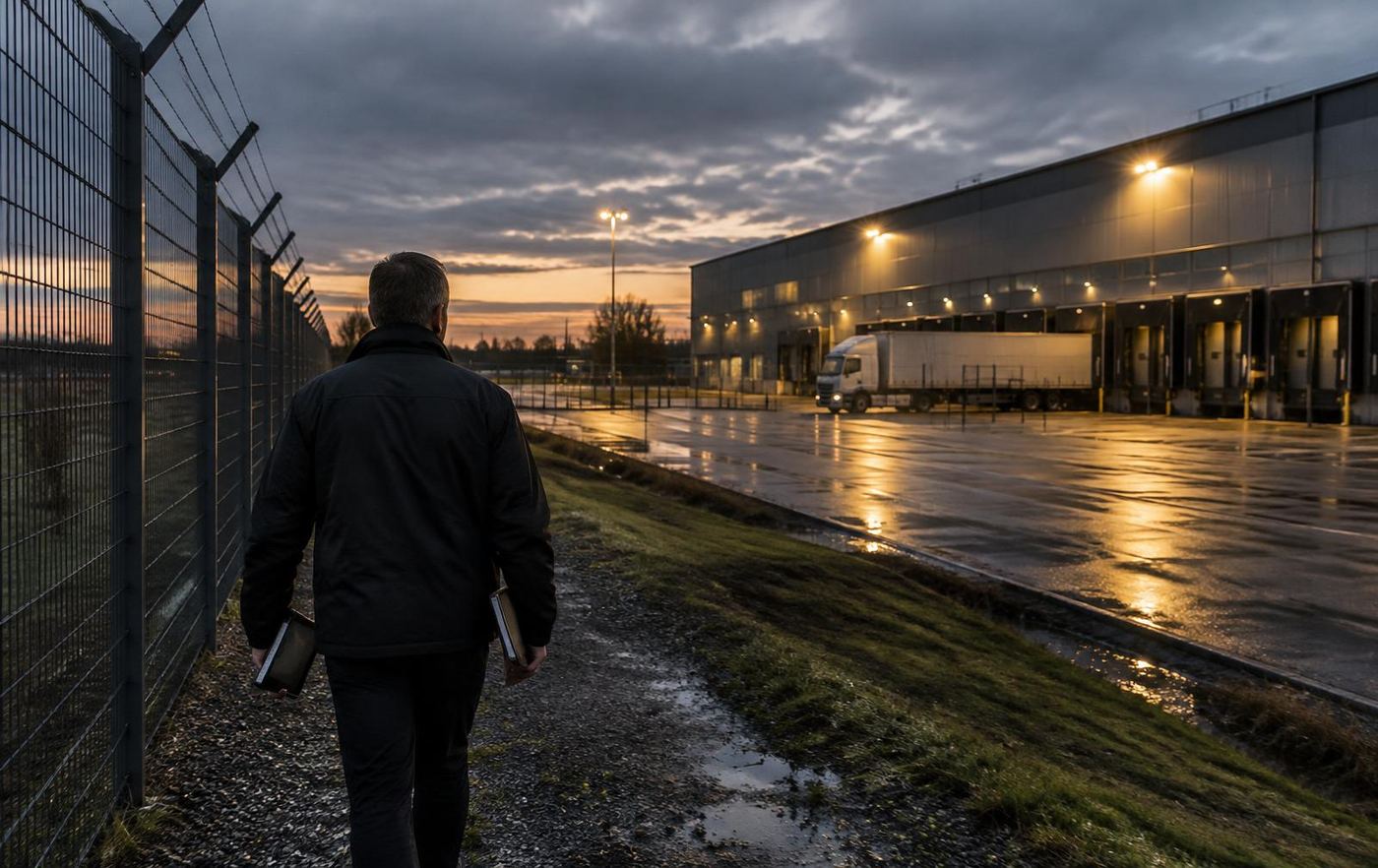
02 / What we examine
For businesses and organizations that want an honest view of the security they already have. Each audit is scoped to the site, the systems and the questions that matter to you.
A / Coverage
Where cameras actually see, what they miss, image quality in real conditions, recording and retention, and who reviews the footage.
B / Access
Doors, credentials, visitor handling, alarm zones, and how alarms are acknowledged and acted on in practice.
C / Communications
Radios, contact lists, post orders and written procedures, and whether they match how the site really runs.
D / Personnel
Post coverage, shift handovers, training records, and how well security personnel know the site and their procedures.
E / Readiness
Pre-agreed, ethical exercises that show how people and systems respond together, from tabletop walkthroughs to planned on-site drills.
F / Findings
Findings tied to what was observed, practical recommendations in order of priority, and an optional return visit to verify that agreed changes hold.
03 / What an audit looks at
Most security is a mix of equipment, procedures and people. An audit looks at all three in the places where they meet.
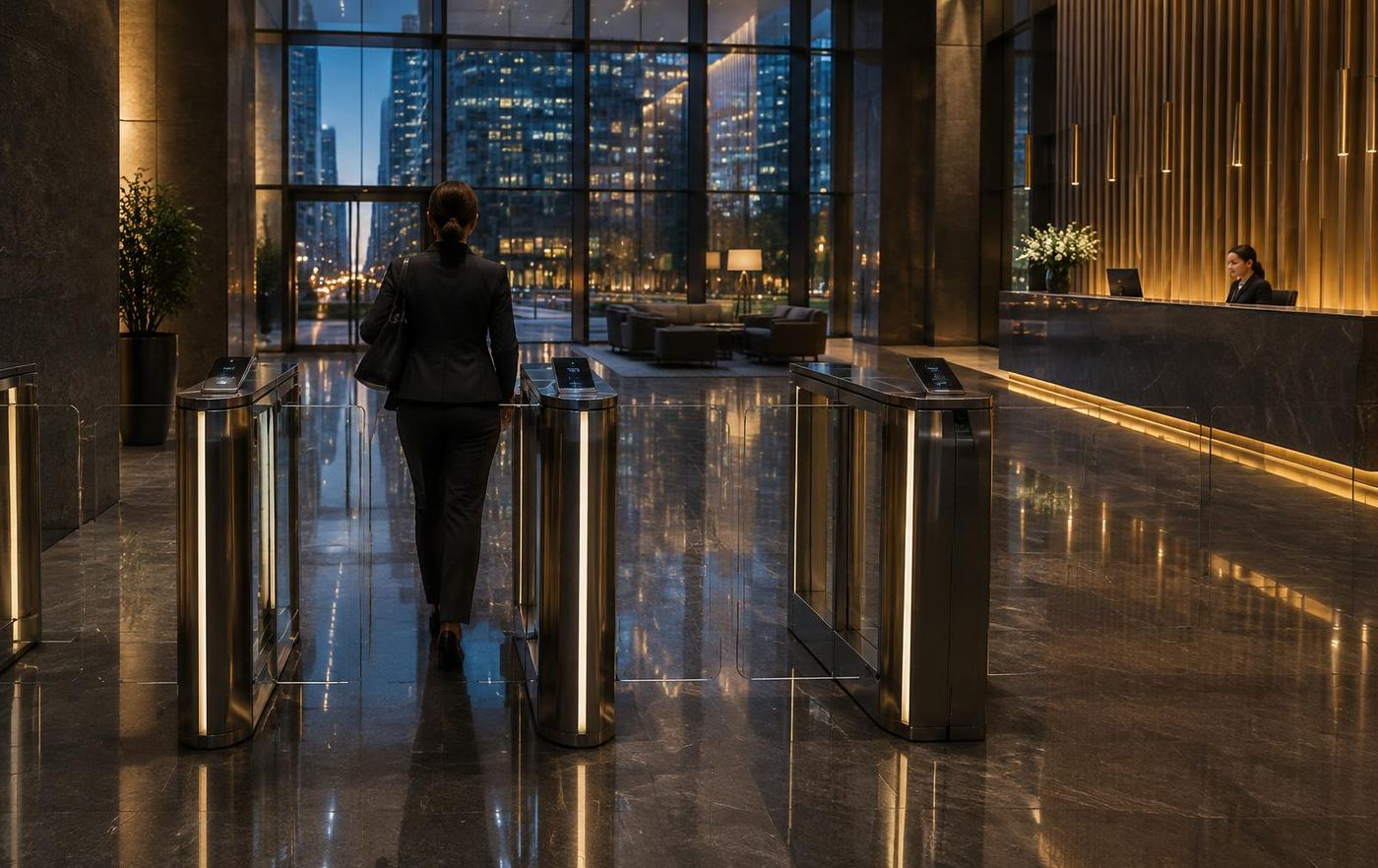
Access control
Doors, credentials and visitors
How people actually get in: credentials, turnstiles, visitor handling and what happens when someone holds a door.
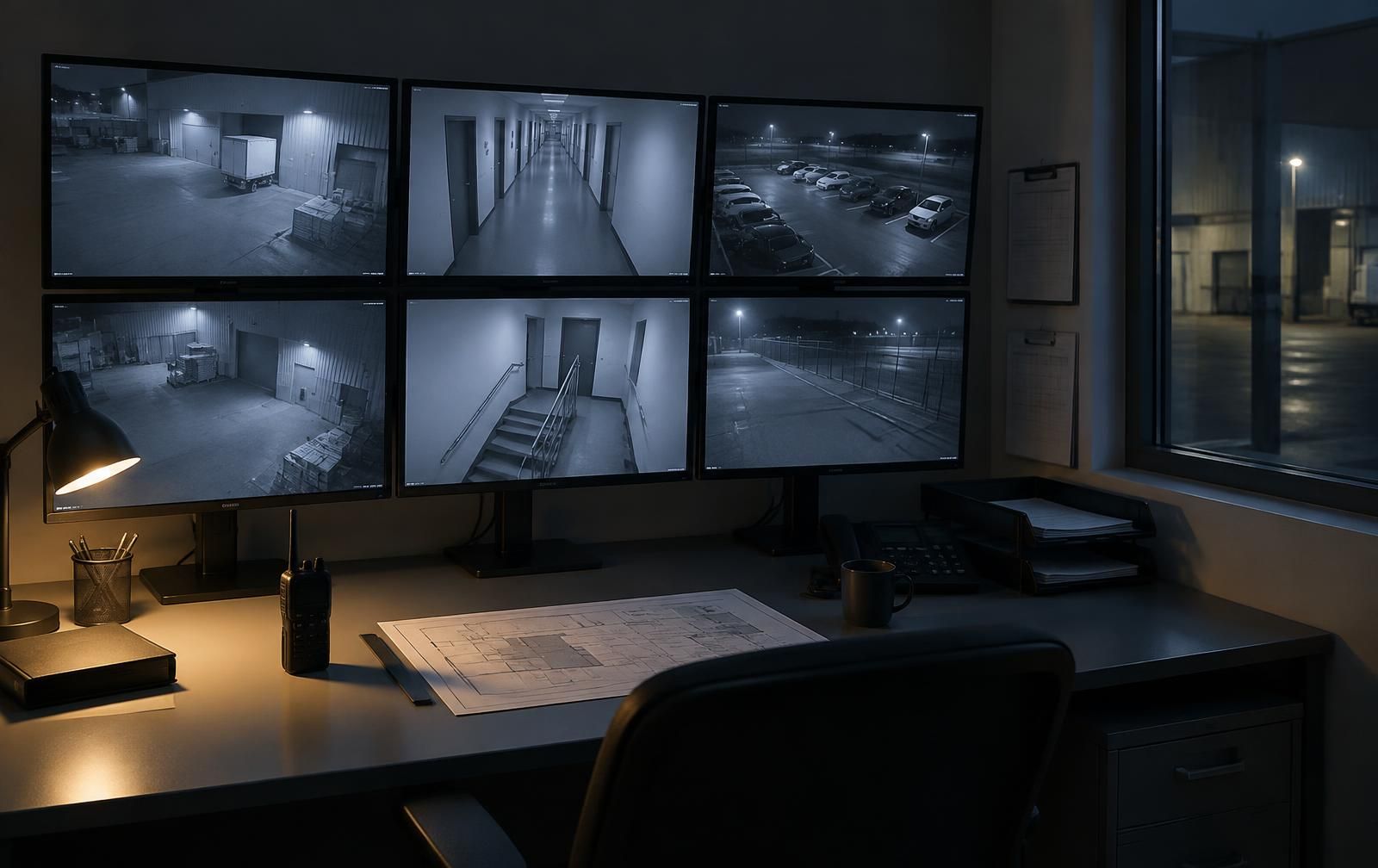
Operations & coverage
What the cameras really see
Monitoring, recording and who responds, compared with what the site assumes is covered.
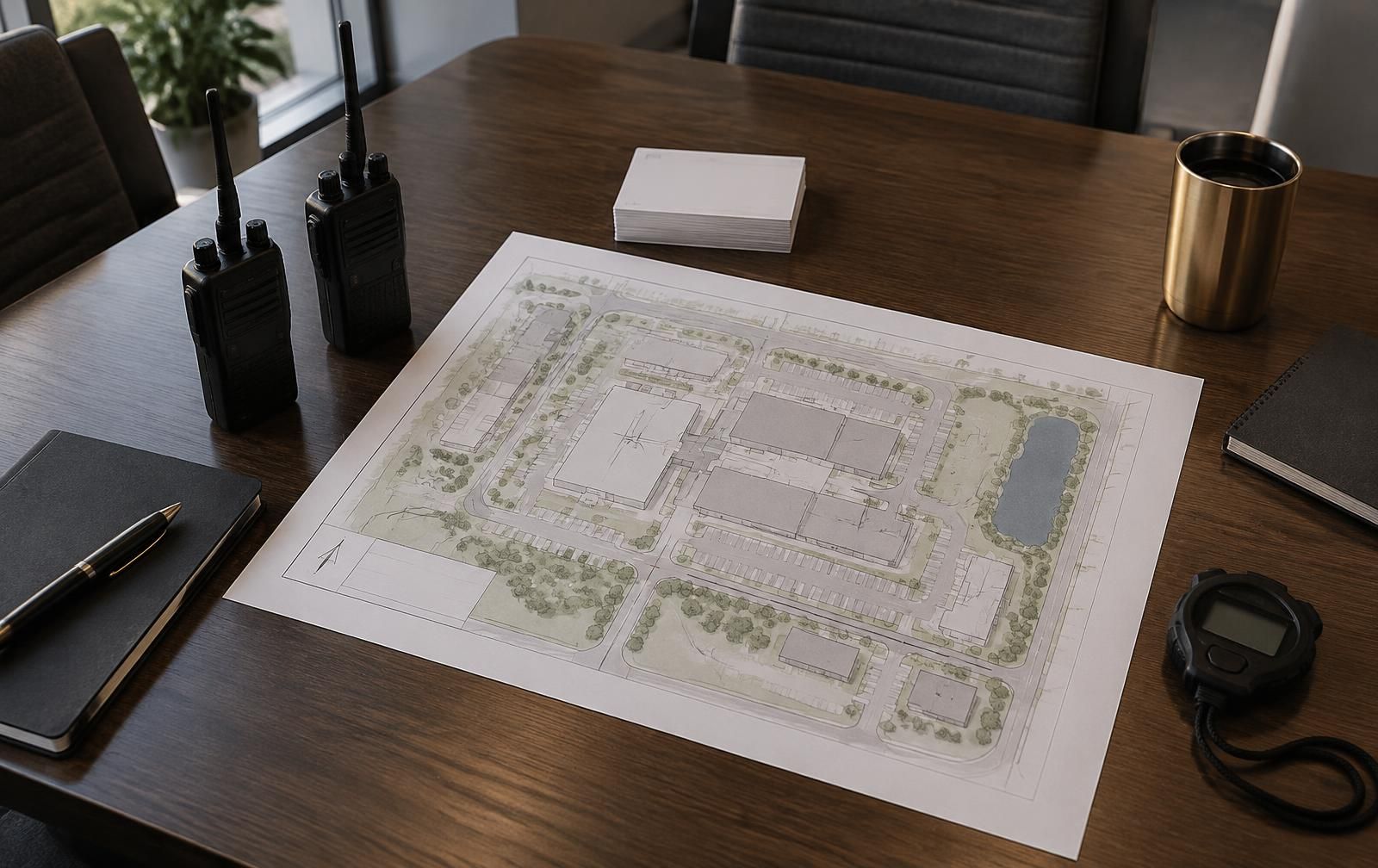
People & readiness
Rehearsed before it is needed
Tabletop walkthroughs and agreed drills that show how people, procedures and systems respond together.
04 / LAYERED PROTECTION
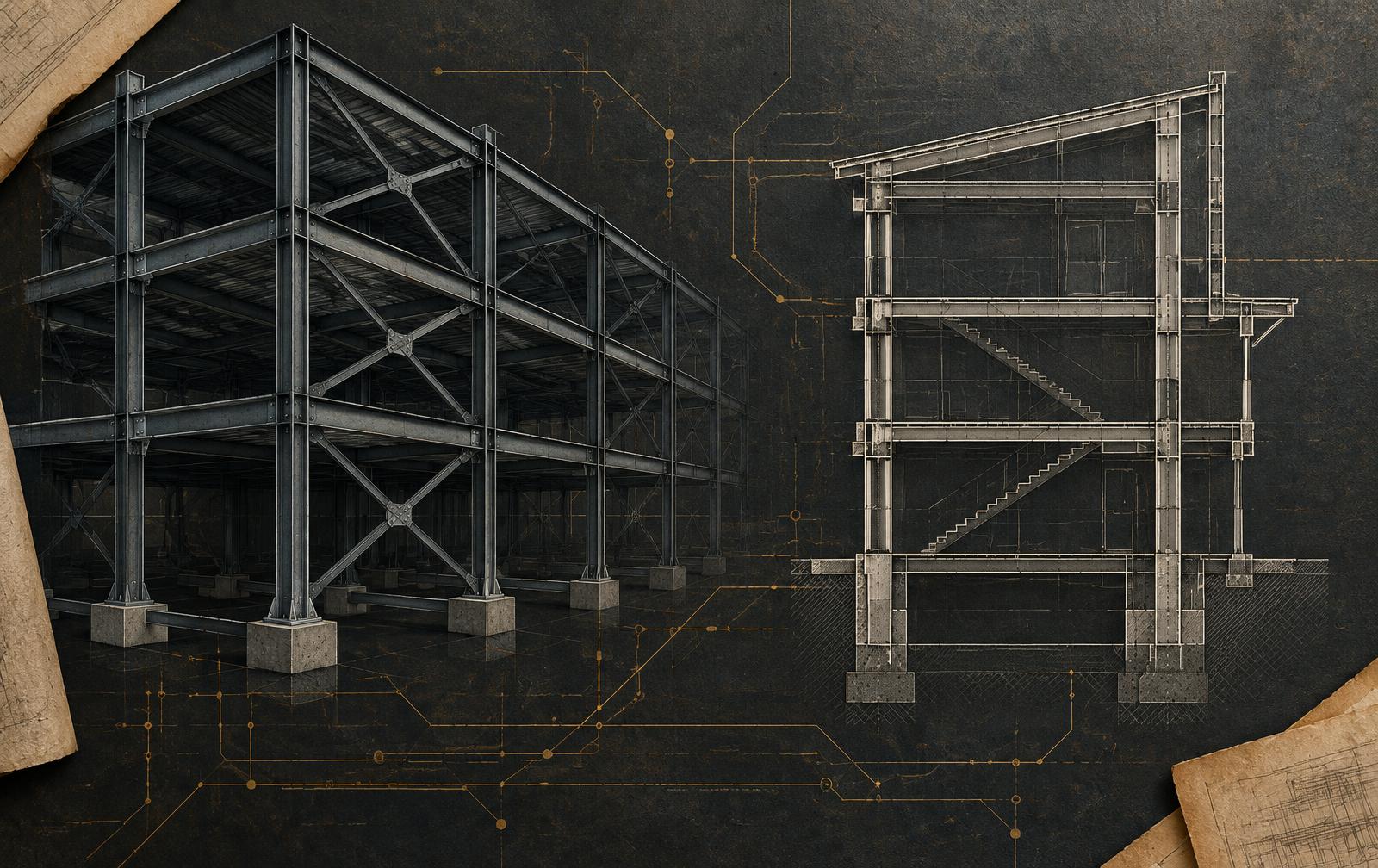
Human decisions, physical access, communications and digital records each depend on the others. A strong door with a shared code, or a camera no one reviews, leaves a gap that only shows when the layers are looked at together.
Human decisions & trainingHuman
Who is on duty, what they know, and how they decide under pressure.
Physical access & perimeterPhysical
Doors, gates, credentials and the routes people actually use.
Communications & proceduresPhysical & digital
Radios, contact lists and written procedures, and whether they match reality.
Cameras, alarms & recordsDigital
Coverage, alerts, logs and recordings, and who reviews them.
05 / RULES OF ENGAGEMENT
Every audit or test begins with written authorization from someone entitled to give it, and agreed rules of engagement: what will be examined, when, by whom, and what is out of bounds.
Exercises are planned so that no one is put at risk. We don't attempt unauthorized access, covert impersonation, weapons demonstrations or anything outside the agreed scope. Information about staff is handled with care and used only for the agreed purpose.
Findings describe what was examined and observed. An audit is not a regulatory certification, a license or a promise that an incident won't occur.
Capabilities, equipment, personnel and delivery requirements are confirmed for each assignment. Regulated services are subject to applicable licensing and authorization.
06 / What you leave with
You decide what to change and when. The organization owns implementation; we can return to verify that agreed changes hold.
07 / HOW IT DIFFERS
Security Auditing & Testing examines the operational security you already have, its equipment, people and procedures, at a point in time.
Architecture & Assurance looks at how protection is designed across the whole organization and keeps consequential change in view over time. The two can work together.
NEXT / CONVERSATION
Tell us broadly about the site or organization and what you want examined. Leave out floor plans, credentials and staff details; we agree how information is handled before any work begins.